


Textbooks and Course Books
HOMZA, Martin. The Handbook of the Oldest Slovak History. Bratislava : Univerzita Komenského v Bratislave , 2024, 265 s.
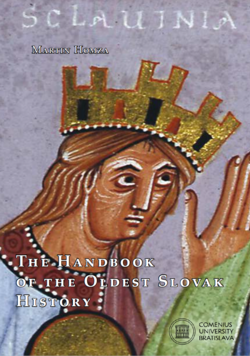
The book by Prof. Martin Homza The Handbook of the Oldest Slovak History is problem-orientedand at the same time a comprehensive and well-balanced essay on the early Slovak history from ancient times to the early Middle Ages. The book is based on the results of the latest research of Prof. Martin Homza and contains the author’s deeply original view of earliest stages of Slovak ethnogenesis and state formation within the context of Central Europe,which, in our deep conviction, is extremely promising. Thus, the book not only makes a foreign reader familiar with the initial pages of Slovak history, but also introduces a reader to the current state of reflections on the processes of social and cultural evolution in relation to the era that had a formative role in the history of Slovakia and Central Europe as a whole. There are no books of this kind in modern historiography." Denis E. Alimov Institute of History St. Petersburg State University
<output>PODOLAN, Peter - VIRŠINSKÁ, Miriam. Slovenské dejiny III. Bratislava : Literárne informačné centrum, 2014. </output>
BENKOVÁ, Eva. Poddaní na stupavskom panstve v ranom novoveku. Učebné texty k hospodárskym a sociálnym dejinám 1. Bratislava : Univerzita Komenského v Bratislave , 2020, 84 s.
You can download the course materials at: stella.uniba.sk/texty/FIF_EB_podd_stupava_novovek_2020.pdf
<output>PODOLAN, Peter - VIRŠINSKÁ, Miriam. Slovenské dejiny III. Bratislava : Literárne informačné centrum, 2014. </output>
VAŠŠ, Martin. Československý a slovenský nacionalizmus : polemické reprezentácie národa na Slovensku v rokoch 1918 – 1938. Bratislava : Stimul, 2017, 108 s.
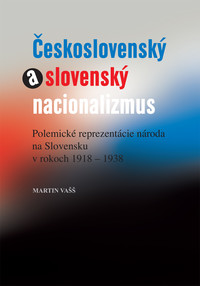
The textbook offers a comprehensive synthetic assessment of nationalism in the Czechoslovak—and particularly Slovak—context. The author distinguishes between Czechoslovak and Slovak nationalism and their manifestations within Slovak society. In doing so, he avoids the populist and ideological judgments that have often characterized discussions of these issues in historical scholarship, opting instead for a serious and balanced evaluation of these complex questions.
Documenting the entire process of struggle between Czechoslovak and Slovak nationalism through an analysis of the positions and opinions of active politicians is not only precise, but also carries a natural scholarly value. This approach enables students to understand and assess the political, social, and cultural struggle during the First Czechoslovak Republic over the status of Slovakia within the state with appropriate perspective—within the context not only of domestic political conflicts, but also of international developments and the attitudes of neighboring countries toward Czechoslovakia, and Slovakia in particular.
In this respect, the textbook advances the study and understanding of these complex issues by placing them within broader international contexts. At the same time, the materials are written in an accessible style, making them a suitable and effective learning resource for students of history and related academic disciplines.
The course materials can be downloaded at: stella.uniba.sk/texty/FIF_MV_nacionalizmus1.pdf
<output>PODOLAN, Peter - VIRŠINSKÁ, Miriam. Slovenské dejiny III. Bratislava : Literárne informačné centrum, 2014. </output>
PODOLAN, Peter - VIRŠINSKÁ, Miriam. Slovenské dejiny III. Bratislava : Literárne informačné centrum, 2014.
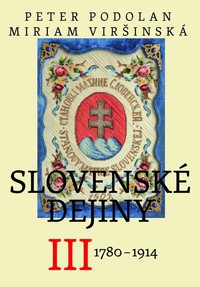
The “long” 19th century in Slovak history is an exceptionally eventful period. From the very beginning of their work, the authors faced a demanding task: to present Slovak history within a relatively limited scope in a clear and accessible style, so that the volume would appeal not only to students of history but also to the general public interested in Slovakia’s past.
In line with the concept of the existing Slovak history project of the Literary Information Centre, the authors focus primarily on presenting Slovak history in chronological order, situating it within a broader state and international context, and showing how nationwide—and ultimately European—developments influenced it. The predetermined length and editorial guidelines of the volume set limits that the authors consistently observed.
Given the previously published volumes of Slovak history, this installment also concentrates mainly on the political and intellectual history of the Slovak nation in the 19th century. The authors hope that this volume, too, will find its readership, much like Slovak History I, IV, and V.